
Talking with someone you love about hospice care can feel tender, emotional, and even overwhelming. Many families worry that bringing up hospice will sound like they are giving up. Others fear their loved one may feel frightened, hurt, or misunderstood. These feelings are natural. When a serious or life-limiting illness changes daily life, every conversation can carry extra weight—but it doesn’t have to.
Hospice is about changing the focus of care when comfort, dignity, and quality of life become the priority. It is about helping patients and families spend less time in crisis and more time supported, informed, and surrounded by compassionate care.
At Hospice Brazos Valley, families do not have to walk through these conversations alone. Since 1989, we have served Central Texas with community-based, nonprofit hospice care rooted in dignity, comfort, and trust. When the time comes to talk about next steps, a gentle and honest conversation can open the door to more peace for everyone involved.

Start With Love, Not Logistics
The first conversation does not have to include every medical detail, decision, or answer. In fact, it may be better if it does not. A loved one facing a serious illness may already feel surrounded by appointments, treatments, symptoms, and decisions. Beginning with paperwork or practical details may feel too sudden, so start from a place of love.
You might say, “I want to talk about what would help you feel most comfortable right now,” or “I want to understand what matters most to you.” These words shift the conversation away from fear and toward care. They remind your loved one that their wishes, comfort, and dignity are at the center.
Hospice conversations are most helpful when they begin with listening. Before explaining options, ask what your loved one is feeling. Are they tired? Worried? Hoping to stay at home? Wanting fewer hospital visits? Needing better pain or symptom support? These answers can guide the next steps.
Focus on Comfort and Quality of Life
Many people misunderstand hospice because they think it means nothing more can be done, but hospice care does a great deal. It provides medical, emotional, and spiritual support for the patient and the whole family. The goal is to maximize quality of life, provide comfort, and help patients achieve their goals during a deeply personal season of their life.
When talking with your loved one, it may help to explain hospice in simple terms: hospice is care that focuses on comfort when curative treatment is no longer effective or no longer desired. It helps manage pain and symptoms, supports caregivers, and brings a team of experienced professionals into the patient’s circle of care.

Choose the Right Moment
There may never be a perfect time to talk about hospice, but some moments are better than others. Try to choose a calm time when your loved one is not in severe pain, exhausted, or in the middle of a stressful medical update. A quiet setting can make the conversation feel safer and less rushed.
It is also okay if the conversation happens in pieces. Some families need several talks before they feel ready to make decisions. The first discussion may simply be about feelings. The next may be about goals.
Patience matters. A loved one may need time to process what hospice means. Family members may need time, too.
Use Gentle, Honest Language
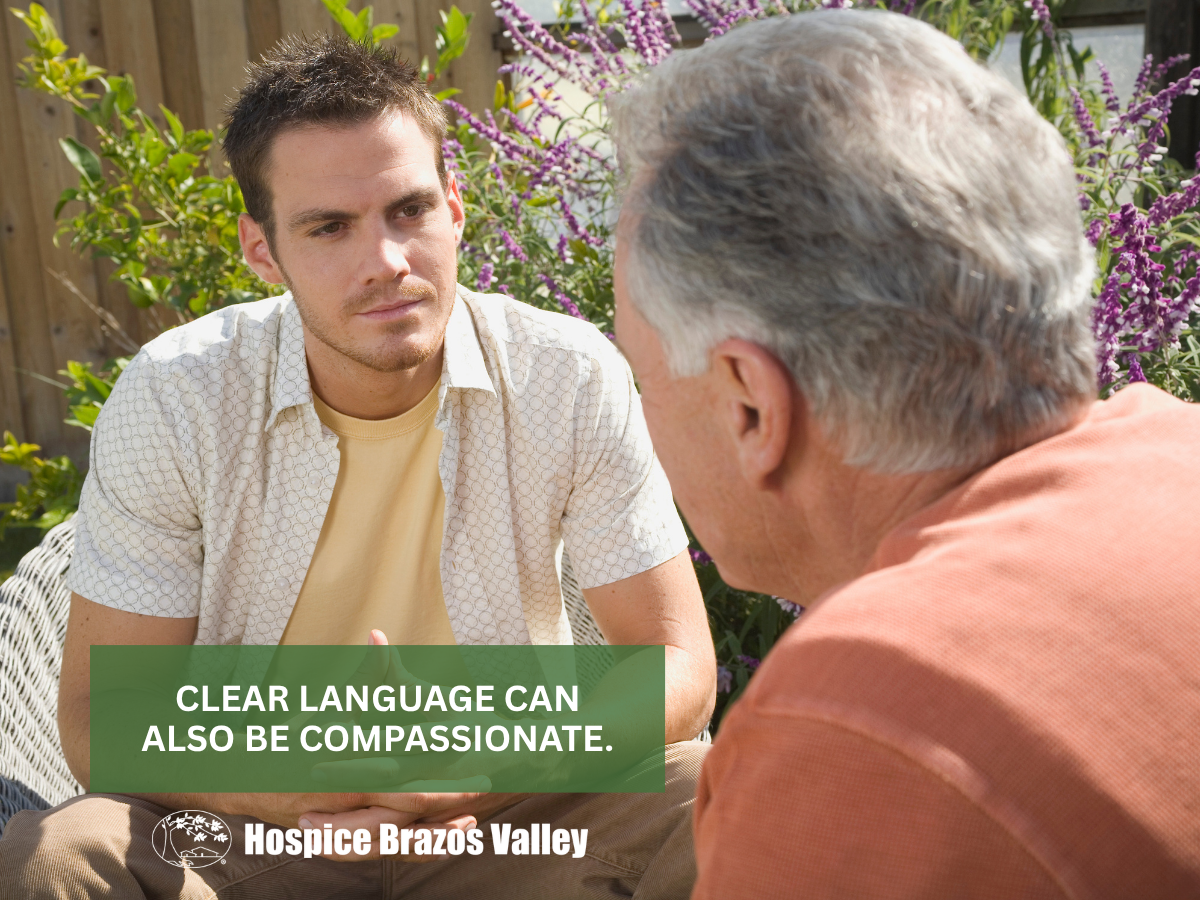
Clear language can also be compassionate. Avoiding the topic may come from a place of love, but it can sometimes leave families feeling confused or unprepared. Gentle honesty allows everyone to understand what is happening and what choices are available.
Instead of saying, “There is nothing else we can do,” try saying, “There may be a different kind of care that focuses on comfort and support.” Instead of saying, “You need hospice,” try saying, “Would you be open to learning about care that could help you feel more comfortable at home?”
These small changes matter. They help your loved one feel included rather than pushed. They also help keep the conversation centered on the patient’s wishes.
Reassure Them They Are Not Alone
A serious illness affects the whole family. Caregivers may feel exhausted, unsure, and afraid of making the wrong decision. Patients may worry about becoming a burden. Hospice care helps ease that weight by surrounding families with a team.
At Hospice Brazos Valley, the care team can include doctors, nurses, hospice care aides, social workers, grief experts, volunteers, and chaplains. Each person brings a different kind of support. Nurses help manage symptoms and medications. Hospice aides assist with personal care. Social workers help families navigate decisions and resources. Chaplains offer support that respects each person’s beliefs and values. Volunteers and grief professionals provide additional comfort and connection.
This team approach can bring relief, and families don’t have to figure everything out alone.
Talk About Where Care Can Happen
Many patients want to remain in familiar surroundings, close to the people and places they love. Hospice care can happen wherever the patient calls home. For some that may be a private residence while others may be a nursing facility or assisted living community. Hospice Brazos Valley also provides inpatient visits at local hospitals when frequent assessment and skilled medical interventions are needed.
This can be comforting for loved ones who fear hospice means leaving home. In many cases, hospice helps support the patient in the place where they feel most comfortable.
Invite Questions
Your loved one may have questions you cannot answer. That is okay. You do not have to be the expert. Your role is to simply open the door, and make sure your loved one’s questions are answered.
Will I still see my doctor? Will I still receive medicine? Can my family call for help? What happens if my symptoms change? Who pays for hospice care? What support is available for caregivers?
These are exactly the kinds of questions a hospice team can help answer. Reaching out does not mean a family has already made every decision. It simply means they are gathering information and learning what support may be available.

Remember That Earlier Conversations Can Help
Families often wait to discuss hospice until they are exhausted or in crisis. But talking earlier can make the experience less frightening. It gives the patient time to express their wishes. It gives caregivers time to understand support options. It gives everyone a chance to make decisions with more clarity and less pressure.
Hospice is about comfort, dignity, and meaningful time. When families begin the conversation with compassion, they create space for connection and support.
If your family is facing a serious illness and wondering what comes next, Hospice Brazos Valley is here to help. A conversation can be the first step toward comfort, guidance, and care that honors what matters most.
FAQs
How do I know when it may be time to talk about hospice?
It may be time to talk about hospice when a loved one has a chronic, serious, or terminal illness and curative treatment is no longer effective or no longer desired. Other signs may include poor quality of life, frequent hospital visits, increasing symptoms, or a desire to focus more on comfort at home. A conversation with a physician or hospice provider can help families understand whether hospice care is appropriate.
Will bringing up hospice make my loved one feel like I am giving up?
Not if the conversation is handled with compassion. Hospice is not about giving up. It is about focusing on comfort, dignity, and quality of life. You can explain that hospice provides extra support for both the patient and family. The goal is to help your loved one feel cared for, heard, and supported.
What if my loved one does not want to talk about hospice?
Give them time. Some people need space before they are ready to discuss end-of-life care. Keep the conversation gentle and patient-centered. You might begin by asking what matters most to them right now or what would help them feel more comfortable. The discussion does not have to happen all at once.
Can family members contact Hospice Brazos Valley themselves?
Yes. While many patients are referred by a doctor, patients, family members, and even friends can make referrals. Reaching out can simply be a way to ask questions, learn about services, and understand whether hospice may be the right next step.
Does hospice support the family too?
Yes. Hospice care supports both the patient and the family. Caregivers may receive education, emotional support, respite options, and guidance from the hospice team. Bereavement and grief support are also part of hospice care, helping families continue to receive support after a loss.