When a loved one begins hospice care, families often wonder what needs to change at home. But there are a few things to remember during this kind of transition—it’s not about turning a home into a hospital. It is about creating a safe, peaceful, and supportive environment where comfort, dignity, and quality of life can remain at the center within your own four walls.
Whether it’s a nursing facility, assisted living community, or another familiar setting, Hospice Brazos Valley knows care can happen wherever the patient calls home, and, for many families, that may be at a private residence. Wherever care takes place, a few thoughtful preparations can help patients and family caregivers feel more confident as hospice begins.

Start With Comfort
The best place to begin is with the patient’s comfort. Think about where your loved one spends most of their time. Is the room easy to reach or move around in? Is there space for family members to sit nearby? Is the lighting gentle? Can the patient rest without too much noise or interruption?
Small changes can make a meaningful difference. A favorite blanket, family photos, soft music, or a familiar chair can help a room feel peaceful and personal. Hospice care honors the whole person, not just the illness. Creating comfort may mean making space for rest, conversation, prayer, quiet, laughter, or simply being together.
Keep Important Items Within Reach
As illness changes daily routines, simple tasks can become tiring. Try to keep frequently used items close by, such as tissues, water, lip balm, glasses, a phone charger, medications, and the call information for your hospice team or nurse. A small table or basket near the bed or chair can help reduce unnecessary movement and make caregiving feel a little easier.
It may also help to keep a notebook nearby. Families often think of questions between visits, and writing them down can make conversations with the care team more helpful. You might note changes in appetite, pain, breathing, sleep, restlessness, or anything that feels different. These details can help us understand what your loved one is experiencing.
Make Pathways Safer
Safety at home does not have to mean a complete rearrangement, but sometimes it simply means looking at the home through the lens of daily care. Clear pathways between the bed, bathroom, and main living area. Move loose rugs, cords, or small furniture that could create a fall risk. Make sure there is enough light for nighttime movement.
If your loved one needs medical equipment, your hospice team or nurse can help determine what is appropriate for their needs. Families do not have to guess what equipment will be needed before care begins. Hospice Brazos Valley staff can assess the home, make recommendations, and help arrange equipment when it is part of the patient’s care plan.

Create a Place for Care Conversations
Hospice brings support, but it can also bring questions. Families may talk with nurses, social workers, chaplains, volunteers, grief professionals, and physicians as part of the care journey. Having a quiet place for these conversations can help everyone feel more settled.
This does not need to be formal. It may be the kitchen table, a chair near the patient’s room, or a quiet corner where family members can step away for a few minutes. These conversations may include symptom updates, emotional concerns, caregiver needs, spiritual support, or practical questions about what to expect.
Let the Home Stay Personal
Sometimes families feel pressure to make everything perfect before hospice begins. But the home does not need to look perfect. It needs to feel safe, familiar, and centered around the person receiving care.
The most meaningful spaces are often the ones filled with ordinary life. A pet resting nearby, grandchildren’s drawings, a favorite quilt, beloved book, or a window with morning light can all bring comfort. Hospice care is life-affirming. It helps families focus on the moments that matter, even when the season is difficult.
Supporting the Caregiver
Preparing the home also means preparing support for the caregiver. Caregiving can be tender, meaningful, exhausting, and emotional all at once. If more than one person is helping, consider writing down simple responsibilities. Who will pick up groceries? Who will sit with the patient while the primary caregiver rests? Who can help keep track of appointments or family updates?
Caregivers should not feel that they have to carry everything alone. Hospice Brazos Valley can bring guidance, education, emotional support, and help understand changes as they come. Remember that asking questions is never a burden.
Centered on Peace
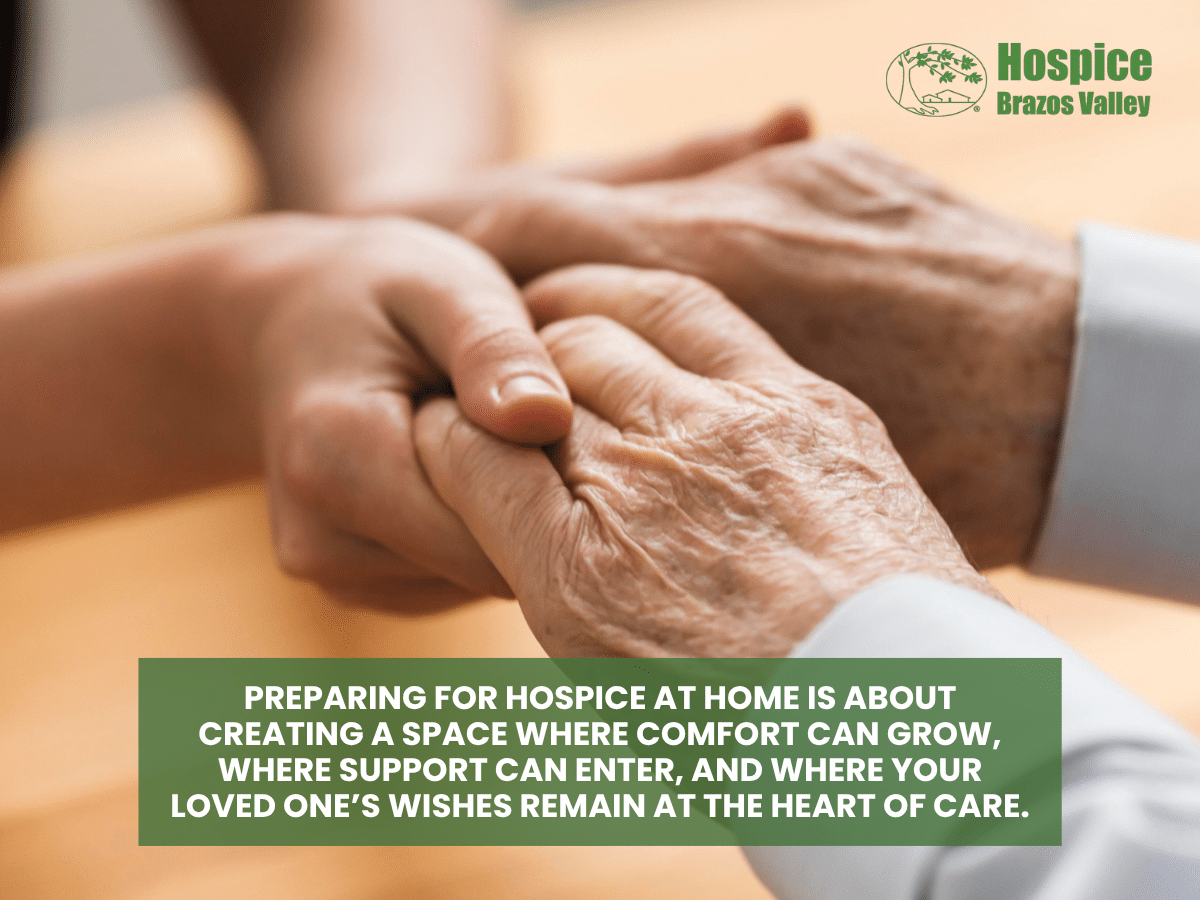
Preparing for hospice at home is about creating a space where comfort can grow, where support can enter, and where your loved one’s wishes remain at the heart of care.
At Hospice Brazos Valley, families are met with compassion, experience, and respect. Whether care begins at home or in another setting, the goal remains the same: to help patients and families feel supported, informed, and surrounded by care during one of life’s most tender chapters.
FAQs
Do we need to rearrange the whole house before hospice starts?
Usually, no. Most families only need small changes, such as clearing walkways, keeping important items nearby, and making the main care area more comfortable. The hospice team can recommend equipment or adjustments based on the patient’s needs.
Will hospice tell us what medical equipment is needed?
Yes. Families do not have to figure that out alone. Hospice staff assess the patient’s needs and can help arrange appropriate equipment when it is part of the care plan.
Can hospice care happen somewhere other than home?
Yes. Hospice care can happen wherever the patient calls home, including assisted living communities, nursing facilities, or a family member’s home.
What should caregivers keep track of at home?
It can help to write down changes in pain, breathing, appetite, sleep, mood, or questions that come up between visits. These notes can guide helpful conversations with the hospice care team.