
Dignity and Comfort Every Step of the Way
Facing the end of life is a deeply personal journey, and each family experiences it differently. At Hospice Brazos Valley, we strive to make this chapter as meaningful and comfortable as possible. We provide comfort care that relieves pain and enhances quality of life, ensuring every moment of precious time is honored.
Our work is centered on listening to the wishes of the patient. Some prefer to remain in a private residence, surrounded by familiar spaces and loved ones. Others may need the additional support of inpatient care, where our hospice care providers are available 24/7 to manage complex symptoms. In every setting, we focus on compassionate pain management, thoughtful emotional support, and skilled medical care.
How Our Team Supports Families
The transition to hospice can feel overwhelming, but no one has to walk that road alone. From the first conversation, our hospice provider surrounds both the patient and their family members with understanding and support.
- Hospice Nurses and Hospice Doctor
Our clinical staff, guided by a medical director and hospice doctor, leads symptom management and medical treatments focused on comfort. Through skilled assessments and ongoing regular visits, they adjust medications and provide pain relief to ensure the hospice patient’s needs are met. - Social Workers and Emotional Support
Our social workers are there to help family caregivers navigate decisions, offer counseling, and provide resources that ease the burden of caregiving. Their guidance helps families prepare emotionally for the final months of life. - Medical Equipment, Medical Supplies, and Routine Home Care
Hospice is not just about visits—it’s about creating a safe and supportive environment. We provide medical equipment, medical supplies, and dependable routine home care so patients and family caregivers can focus on what matters most. - Care Plan and Levels of Hospice Care
Every patient receives an individualized care plan that adapts as needs change. Whether at home, in a facility, or requiring inpatient care, we ensure the right level of hospice care is provided at the right time.
The True Benefits of Hospice Care
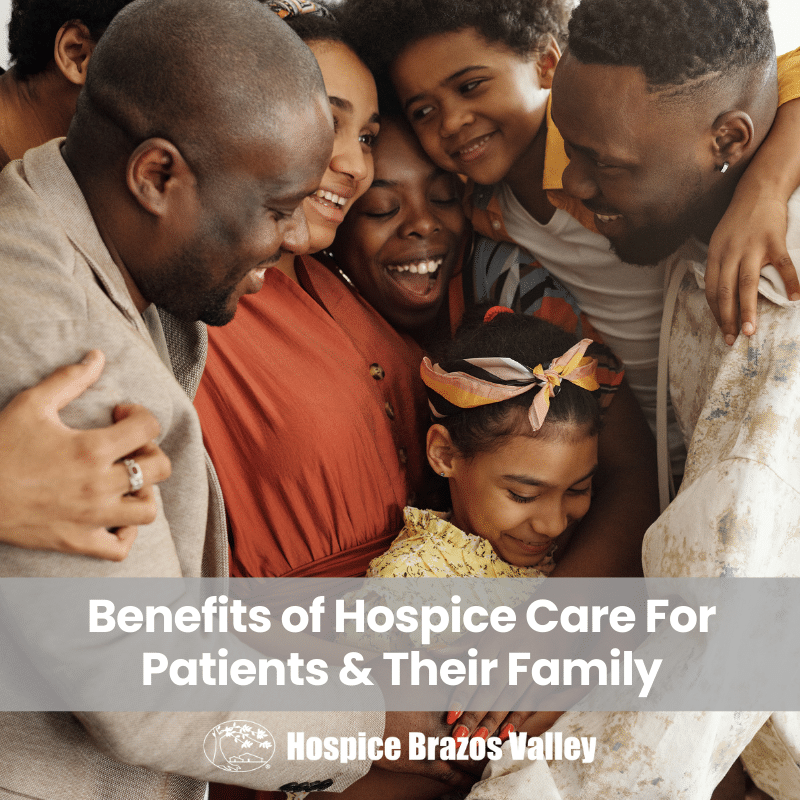
Many families hesitate to begin hospice, but once they do, they quickly recognize the profound benefits of hospice care. Patients experience reduced stress and discomfort, families find peace in knowing their loved one’s choices are respected, and everyone gains more time for meaningful connection.
Some of the key benefits include:
- Improved Comfort and Pain Relief
Hospice staff proactively manage symptoms through effective pain management, ensuring patients are comfortable without unnecessary hospitalizations or emergency room visits. - Emotional and Spiritual Support
Families receive counseling, guidance, and ongoing encouragement from our interdisciplinary team of hospice professionals. - Time Together
By reducing hospital trips and focusing on care in a private residence, families spend more precious time together. - Coverage Through the Medicare Hospice Benefit
Most patients qualify for the Medicare hospice benefit, which covers the majority of hospice services, from staff visits to medications and equipment. This ensures finances are not a barrier to compassionate end-of-life care.
Hospice Care in the Normal Course of Life
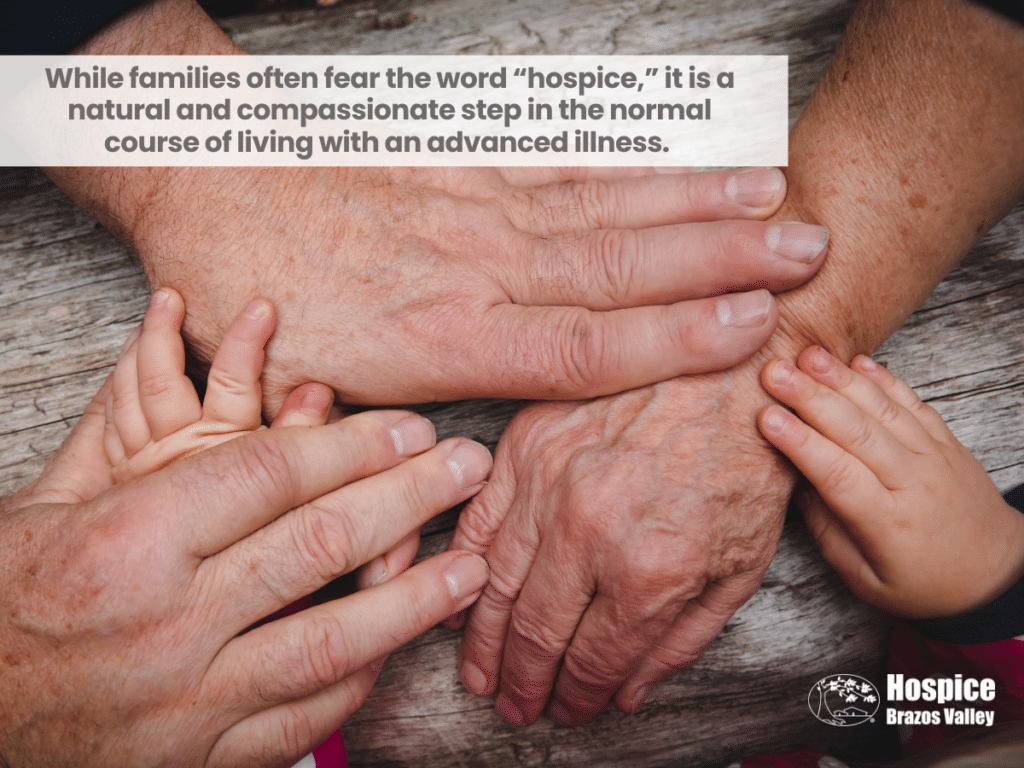
While families often fear the word “hospice,” it is a natural and compassionate step in the normal course of living with an advanced illness. Our role is not to shorten or lengthen life expectancy, but to support patients through their final months with dignity. By easing suffering, reducing unnecessary emergency room visits, and providing holistic end-of-life care, we ensure the last chapter of life is filled with peace and meaning.
Frequently Asked Questions
- How does hospice care help with pain and symptoms?
Our team specializes in pain management and symptom control. Through medications, equipment, and guidance from our medical director and hospice doctor, we focus on keeping patients comfortable so they can spend more precious time with loved ones.
- Can hospice care be provided at home?
Yes. Many hospice patients choose to remain in a private residence with support from family caregivers. We supply the necessary medical supplies and medical equipment, along with routine home care visits, so families don’t need to rely on repeated emergency room trips.
- What role do family caregivers play?
Family caregivers are central to the care process. Our hospice professionals provide training, guidance, and emotional reassurance so caregivers feel confident meeting the patient’s needs while balancing their own well-being.
- Who oversees the hospice program?
Each hospice program is directed by a licensed medical director who works closely with hospice care providers, nurses, and social workers. This ensures consistent, high-quality care that aligns with the wishes of the patient.
- Will hospice replace my current doctors?
No. Hospice works alongside existing healthcare providers. The hospice care team collaborates with your doctors to coordinate medical treatments that focus on comfort and quality rather than cure.
- What happens if symptoms suddenly worsen?
If care at home isn’t enough, patients may temporarily receive inpatient care to stabilize symptoms. Our staff remains available around the clock, ensuring families feel supported during urgent changes in the normal course of illness.
We’re Here For You
At Hospice Brazos Valley, we believe every life deserves to be lived fully and comfortably until the very end. By offering compassionate hospice services, expert medical care, and unwavering emotional support, we walk alongside patients and families through one of life’s most challenging journeys.
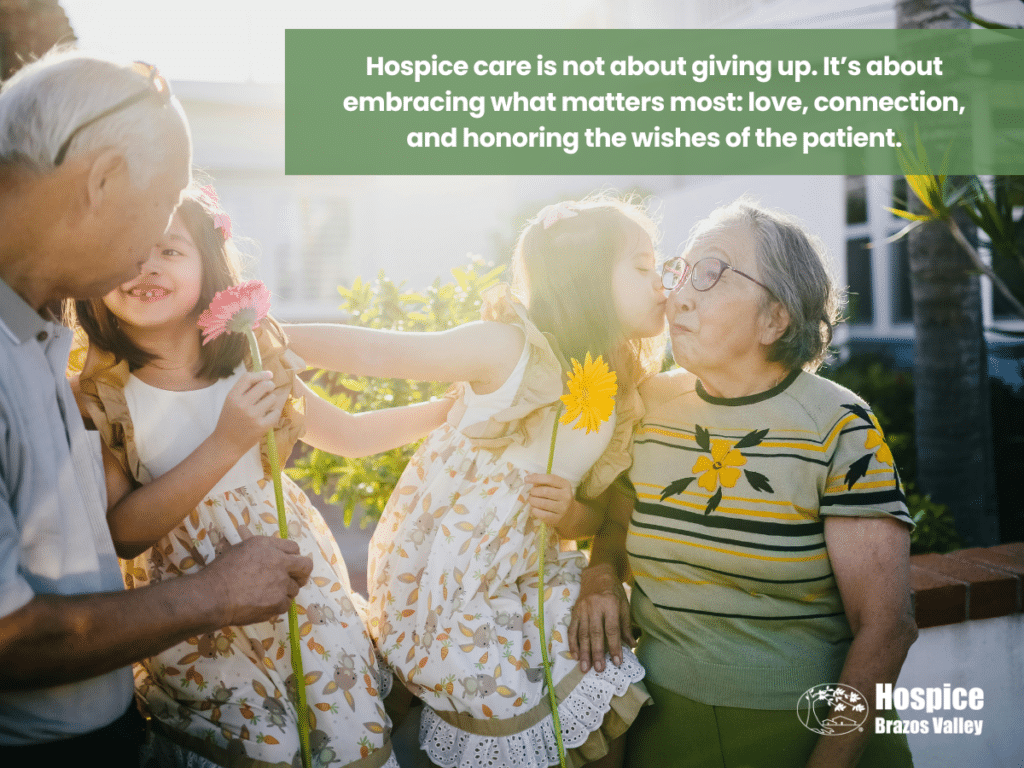
From providing medical supplies and routine home care in a private residence, to ensuring round-the-clock support in inpatient care, our hospice program ensures dignity, comfort, and peace in the final months. Like we said at the start, hospice care is not about giving up—it’s about embracing what matters most: love, connection, and honoring the wishes of the patient.